
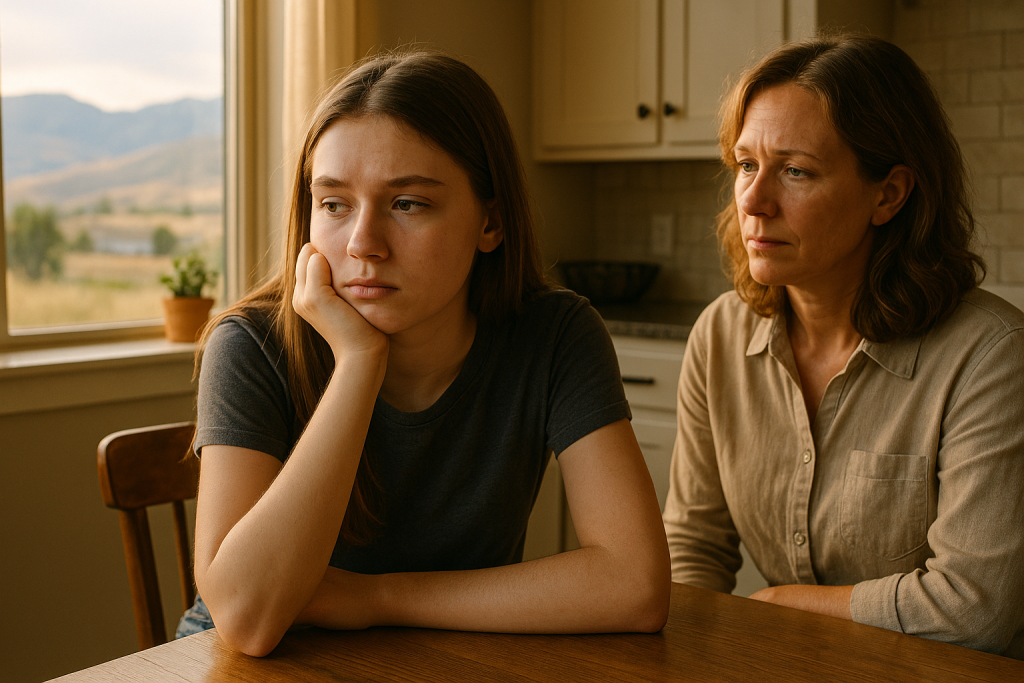
When Your Teen Doesn’t Seem Like Themselves Anymore
Depression can change how a teen thinks, feels, and acts. You may notice them becoming more withdrawn, irritable, or exhausted. It can be hard to tell the difference between normal moodiness and something deeper, but your concern is important.
Common Signs of Depression in Teens
Signs may include loss of interest in activities, changes in sleep or appetite, difficulty concentrating, dropping grades, feelings of worthlessness, or talk of hopelessness. Sometimes depression hides behind humor, busyness, or perfectionism.
How to Gently Check In
You might say, I’ve noticed you haven’t seemed like yourself lately, and I care about you. How have you been feeling? Give your teen time to answer, and try to listen without immediately giving advice.
Supporting Your Teen Day to Day
Keep routines predictable, offer help with tasks that feel overwhelming, encourage movement and sleep, and stay emotionally available even when your teen pulls away. Small moments of connection can make a big difference.
Depression Is Treatable
Therapy, and sometimes medication, can help teens manage depression and rebuild a sense of hope. You do not have to fix everything alone; reaching out for professional support is a wise and loving step.
Need more help right now?
If you or your teen is in immediate danger, please call 911 or go to the nearest emergency room.
If you are in crisis or worried about someone you love, you can reach out for free, confidential support:
- 988 Suicide & Crisis Lifeline – Call or text 988, or chat online 24/7
- NAMI Utah – Education, classes, and support groups for families
- SafeUT App – A free, confidential chat and tip line for Utah youth and families
- Local mental health providers – Therapists, counselors, and medical professionals in your area
This website is for general education only and is not a crisis or emergency service, and it does not provide diagnosis or treatment. You don't have to go through this alone—reaching out for help is a strong and hopeful step.
Resources
Disclosure: Some links may be affiliate links, which means we may earn a small commission at no extra cost to you.