
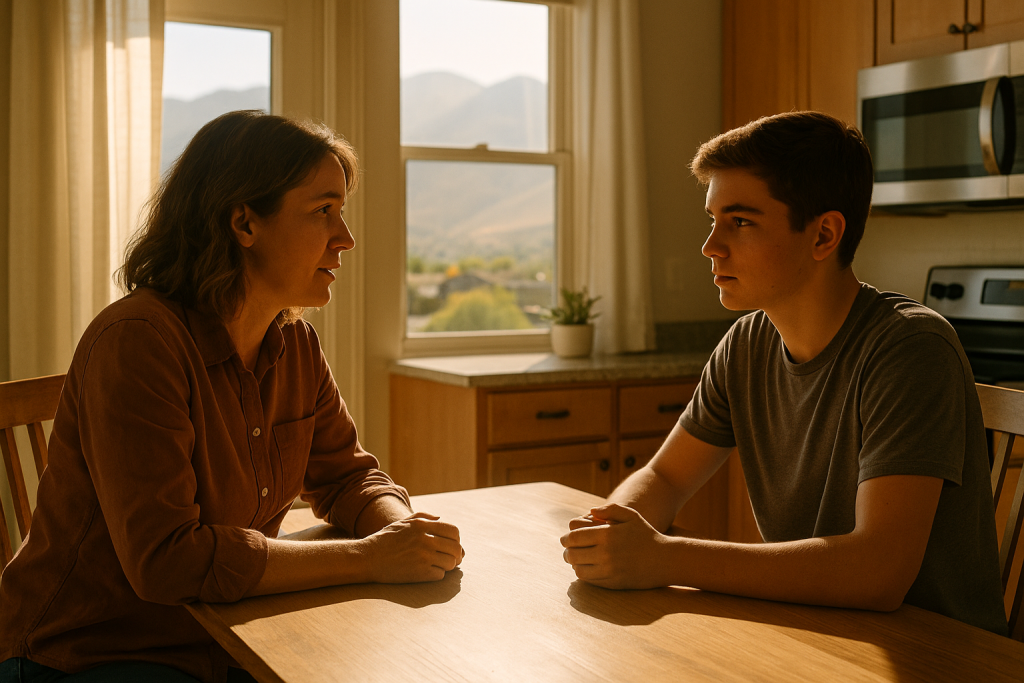
When You’re Afraid Your Teen Might Be Hurting More Than You Realized
Fearing that your teen might be thinking about suicide is one of the heaviest experiences a parent can face. You may feel terrified, overwhelmed, and unsure what to say or do.
Warning Signs to Watch For
Changes like withdrawing from friends, giving away belongings, expressing hopelessness, talking about feeling like a burden, or researching methods can all be warning signs. Sometimes there are no obvious signs at all, which is why emotional check-ins matter.
How to Talk With Your Teen
Ask directly and gently about suicidal thoughts, and listen without judgment. Let your teen know you are glad they shared and that you want to help keep them safe. Talking about suicide does not plant the idea; it opens the door for connection.
When to Seek Immediate Help
If your teen has a plan, intent, or you are unsure about their safety, contact crisis services, use resources like 988 or SafeUT, or go to the nearest emergency room. You do not have to decide alone in a crisis.
Hope and Ongoing Support
With the right support—therapy, family involvement, school accommodations, and sometimes medication—many teens move through suicidal thoughts into a place of greater stability and hope. You and your teen do not have to walk this road alone.
Need more help right now?
If you or your teen is in immediate danger, please call 911 or go to the nearest emergency room.
If you are in crisis or worried about someone you love, you can reach out for free, confidential support:
- 988 Suicide & Crisis Lifeline – Call or text 988, or chat online 24/7
- NAMI Utah – Education, classes, and support groups for families
- SafeUT App – A free, confidential chat and tip line for Utah youth and families
- Local mental health providers – Therapists, counselors, and medical professionals in your area
This website is for general education only and is not a crisis or emergency service, and it does not provide diagnosis or treatment. You don't have to go through this alone—reaching out for help is a strong and hopeful step.
Resources
Disclosure: Some links may be affiliate links, which means we may earn a small commission at no extra cost to you.