
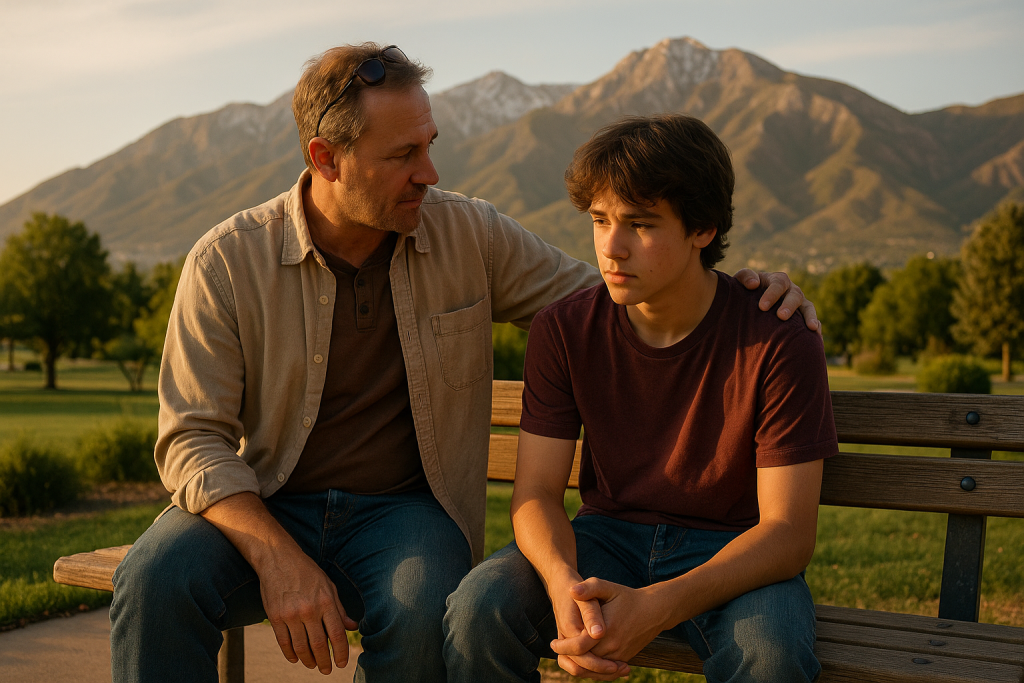
When Mood Swings Seem Bigger Than Typical Teen Ups and Downs
All teens have good days and bad days, but some families notice extreme shifts—periods of very high energy and little sleep, followed by deep crashes into sadness or irritability. If you live in Utah and wonder whether your teen might be dealing with bipolar disorder, it’s important to know you’re not alone and that help is available.
What Bipolar Disorder Can Look Like in Teens
Bipolar disorder involves changes in mood, energy, and activity levels that are more intense than typical moodiness. In teens, this can look like:
- Times of feeling unusually “up,” wired, or invincible.
- Very little need for sleep with lots of energy.
- Racing thoughts, fast talking, or risky behavior.
- Followed by stretches of deep sadness, hopelessness, or anger.
- Significant changes in grades, friendships, or daily functioning.
Why Professional Evaluation Matters
Because symptoms can overlap with ADHD, depression, trauma, and substance use, a careful evaluation is essential. A qualified child and adolescent psychiatrist, psychologist, or psychiatric provider can help sort out what’s happening and recommend appropriate treatment.
Treatment Options for Teens in Utah
Bipolar treatment for teens may include:
- Medication management. Mood‑stabilizing medications are often a key part of treatment.
- Individual therapy. Helping your teen understand their diagnosis, recognize warning signs, and develop coping strategies.
- Family therapy. Improving communication, safety planning, and support at home.
- Higher levels of care. Inpatient, residential, or day treatment programs when safety is a concern or symptoms are severe.
Your Role as a Parent
Teens with bipolar disorder need parents who can stay calm, seek good information, and advocate for appropriate care. It’s okay to have your own feelings about the diagnosis—getting support for yourself is part of caring for your teen.
Taking a First Step
If you’re concerned, start by talking with your teen’s primary care provider or a local mental health clinic. Ask for a referral to someone experienced with mood disorders in adolescents. Bipolar disorder can be serious, but with the right treatment and family support, many teens learn to manage their symptoms and build meaningful, hopeful lives.
Need more help right now?
If you or your teen is in immediate danger, please call 911 or go to the nearest emergency room.
If you are in crisis or worried about someone you love, you can reach out for free, confidential support:
- 988 Suicide & Crisis Lifeline – Call or text 988, or chat online 24/7
- NAMI Utah – Education, classes, and support groups for families
- SafeUT App – A free, confidential chat and tip line for Utah youth and families
- Local mental health providers – Therapists, counselors, and medical professionals in your area
This website is for general education only and is not a crisis or emergency service, and it does not provide diagnosis or treatment. You don't have to go through this alone—reaching out for help is a strong and hopeful step.
Resources
Disclosure: Some links may be affiliate links, which means we may earn a small commission at no extra cost to you.